
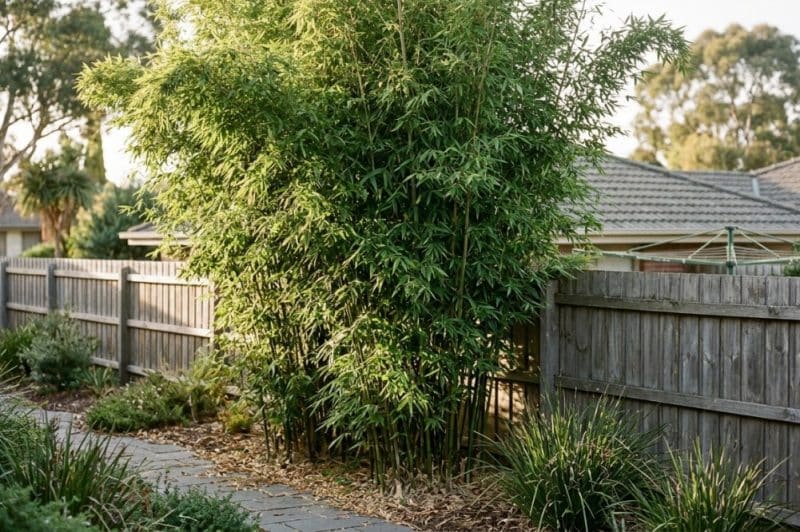
Ask why bamboo gracilis in Melbourne keeps outselling every other screening variety at Bamboo Plus, and the honest answer isn’t marketing. It’s survival: the plant works in the conditions most backyards actually offer, not the conditions a nursery tag assumes.
Running bamboo is the one behind the Facebook group horror stories. The fence line suddenly thirty centimetres deep in root system three doors down. The driveway with a crack pushed clean through it. That’s usually a Phyllostachys running unchecked along a property boundary, planted by someone who wanted height fast and never asked what the roots would do in five years. Half the “bamboo problem” posts online trace back to a running variety planted where a clumping one should have gone.
Why Clumping Beats Running for an Actual Screening Job
Clumping varieties, gracilis included, spread from a tight base rather than sending rhizomes out sideways. The canes multiply outward from the same clump each year instead of colonising next door’s vegetable patch. For a residential fence line, that’s the difference between a hedge and a headache. It also means no rhizome barrier, no annual root pruning, none of the maintenance that makes running bamboo a part time job.
That’s why Bamboo Plus keeps other bamboo varieties in Melbourne alongside gracilis: clumping options for a fence line that needs screening, minus the running bamboo risk. They aren’t interchangeable, though. Growth rate and final height vary a fair bit between clumping varieties, so check both before picking one.
What Bambusa Textilis ‘Gracilis’ Actually Delivers
Gracilis, properly Bambusa textilis ‘Gracilis’, tops out around six to eight metres and gets there without much fuss once it’s past the first year. Bamboo Plus stocks it across seven pot sizes, from $44 up to $480 for something close to an instant screen, with an eighteen to twenty four month window for a newly planted screen to properly fill in. That window shifts with sun exposure and soil, so a bare, exposed fence line usually sits at the slower end of it. Not instant. Close enough, though, next to waiting on a slower hedge to do the same job.
It’s also one of the few screening varieties that handles a hard trim without sulking for a season afterward. That matters when the screen needs to hold a specific height rather than run wild toward the power lines. Low maintenance and drought tolerant once established, gracilis asks less of a home garden than most people expect from something that grows this fast. It’s also part of why anyone searching bamboo gracilis Melbourne keeps landing back on the same product page instead of moving on to a competitor’s.
Where Black Bamboo and Golden Bamboo Actually Fit
Black bamboo earns its keep on looks rather than speed. The canes darken with age into something genuinely striking against a pale fence or a rendered wall, though it takes longer to establish than gracilis and usually costs more for the privilege. Golden bamboo is a different conversation. Its canes turn a warm yellow in full sun, and it tends to read as a feature planting in a courtyard rather than a wall of privacy along a boundary.
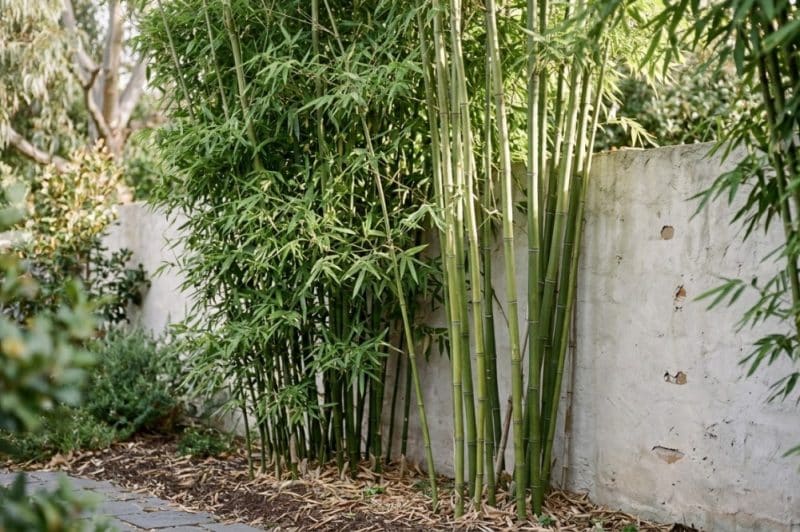
The variety that solves a courtyard’s aesthetic isn’t always the one that solves a fence line’s privacy problem. Conflating the two is where a lot of screening projects go sideways, usually around month eight, when the “screen” everyone was promised still has daylight showing through it.
None of this makes gracilis the automatic answer for every garden. A narrow side passage with reflected heat off brick asks different questions than an open, north facing backyard does. Talk to the Bamboo Plus team about pot size before ordering, not after the fence line’s already marked out with spray paint and good intentions.