
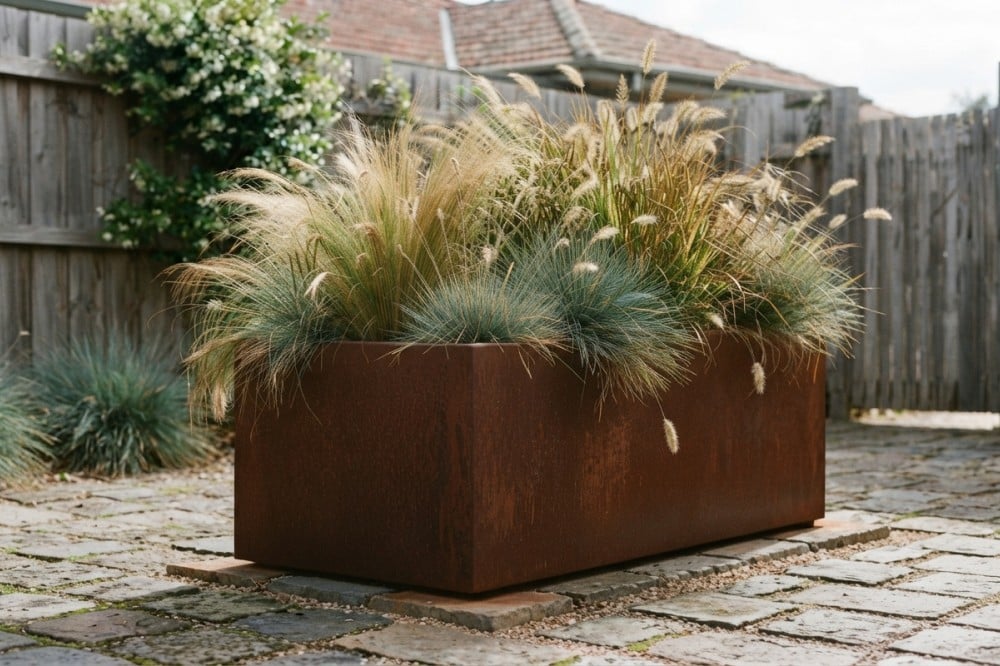
Two planter boxes went into the same courtyard in Brunswick three summers ago. One has turned the colour of a rusted anchor chain. The other looks close to how it arrived, aside from a light film of dust that wipes off in under a minute.
That’s roughly the whole decision once you get past size and colour swatches. Corten steel and fibreglass age in completely different directions. Neither is wrong, but they suit different gardens, and anyone comparing planter boxes in Melbourne eventually has to pick a side.
What corten actually does once it’s outside
The alloy mix in corten matters more than most people realise when they’re comparing two boxes that look nearly identical on a nursery floor. Bare steel starts rusting the moment moisture sits on it, and left alone that reaction just keeps eating through. Corten’s alloy does something different: the reaction stops just under the surface instead of continuing deeper into the metal. Over six to twelve months outdoors, the surface shifts from a dull grey to a deep rust-brown, and then it mostly just sits there.
That layer doesn’t flake off under normal handling.
It’s the reason corten shows up on bridges, shipping containers and architectural cladding about as often as it turns up in gardens. Cut edges sometimes show a slightly different shade for a while after installation. Not a fault, just how the alloy behaves at a fresh edge before it catches up with the rest of the panel.
Why fibreglass planter boxes don’t change colour in Melbourne gardens
Fibreglass takes a completely different route. It’s moulded from resin with UV stabilisers built into the mix, so there’s no metal underneath to protect and nothing corroding in the background. It doesn’t rust, full stop, which means the whole ageing process people associate with corten never gets started.
The failure mode is different too, and it’s worth knowing before you buy rather than after. Drop something heavy on a corner and the gel coat can chip or hairline crack, usually somewhere you’d only notice up close. Cheaper fibreglass can also yellow slightly under harsh UV within a couple of years. Better resin blends barely shift colour at all, even after a full run of Melbourne summers.
Weight decides more than colour does
This is where the choice usually gets made in practice, more than the finish ever does.
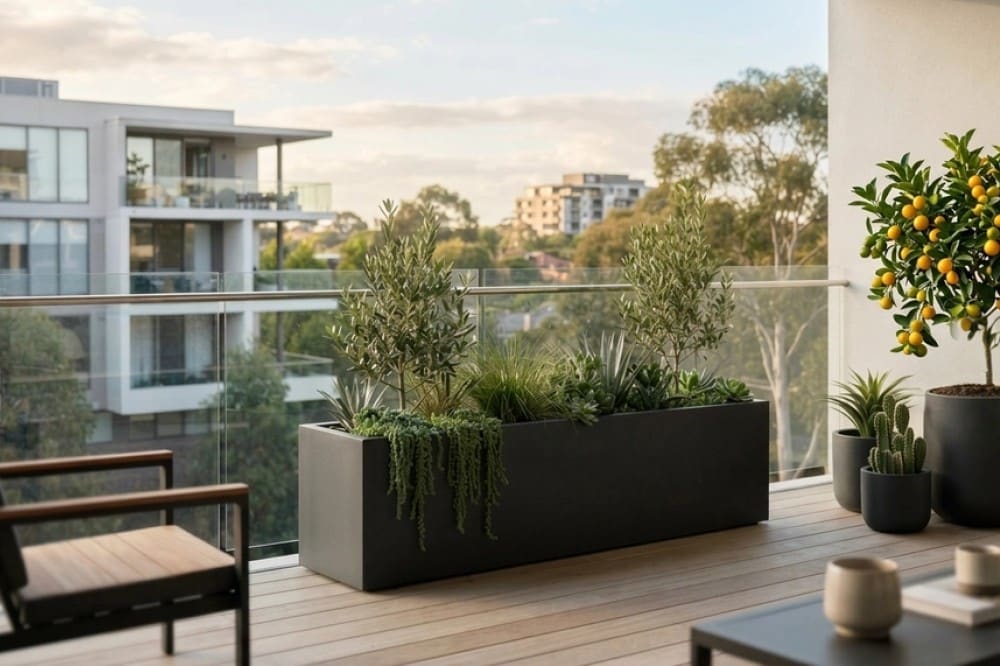
- Fibreglass suits balconies, rooftop courtyards and upstairs terraces, anywhere the building’s load limits matter or you might want to shift the layout later without hiring anyone.
- Corten suits ground-level courtyards and garden beds where the extra weight actually helps, holding position in wind rather than working against you.
- Most planter boxes Melbourne buyers look at come in a genuine size range either way, so weight is rarely the deciding factor for pure aesthetics. It’s almost always about where the box needs to sit.
Colour is the other half of it
Corten keeps shifting slightly for years, picking up subtler tone changes depending on shade, rainfall and how sheltered the spot is. Honestly, that’s the appeal of it for a lot of people. A box that ages instead of just sitting there, looking the same in year five as it did on delivery day.
Fibreglass goes the other way. It comes in a wider colour range from the outset and holds whatever shade it left the factory in. That matters if you’re matching a fixed palette, or a rental property that needs to look the same for the next tenant.
What actually needs upkeep
Corten needs close to nothing once that first year of colour change settles down. No sealing, no repainting.
Fibreglass is just as low-maintenance day to day, though it’s worth skipping anything abrasive when you clean it. A scouring pad will dull the gel coat faster than a few Melbourne summers ever would.
None of this makes one material better than the other on paper. It makes them suited to different problems: a windy rooftop wants the lighter option, an exposed ground-level courtyard wants the one that shrugs off a stray football or an overenthusiastic dog. Worth measuring the actual spot first and talking through sizing with the team at Bamboo Plus before deciding between the two, especially if either one could realistically work.