
Description
Key Features and Growing Conditions
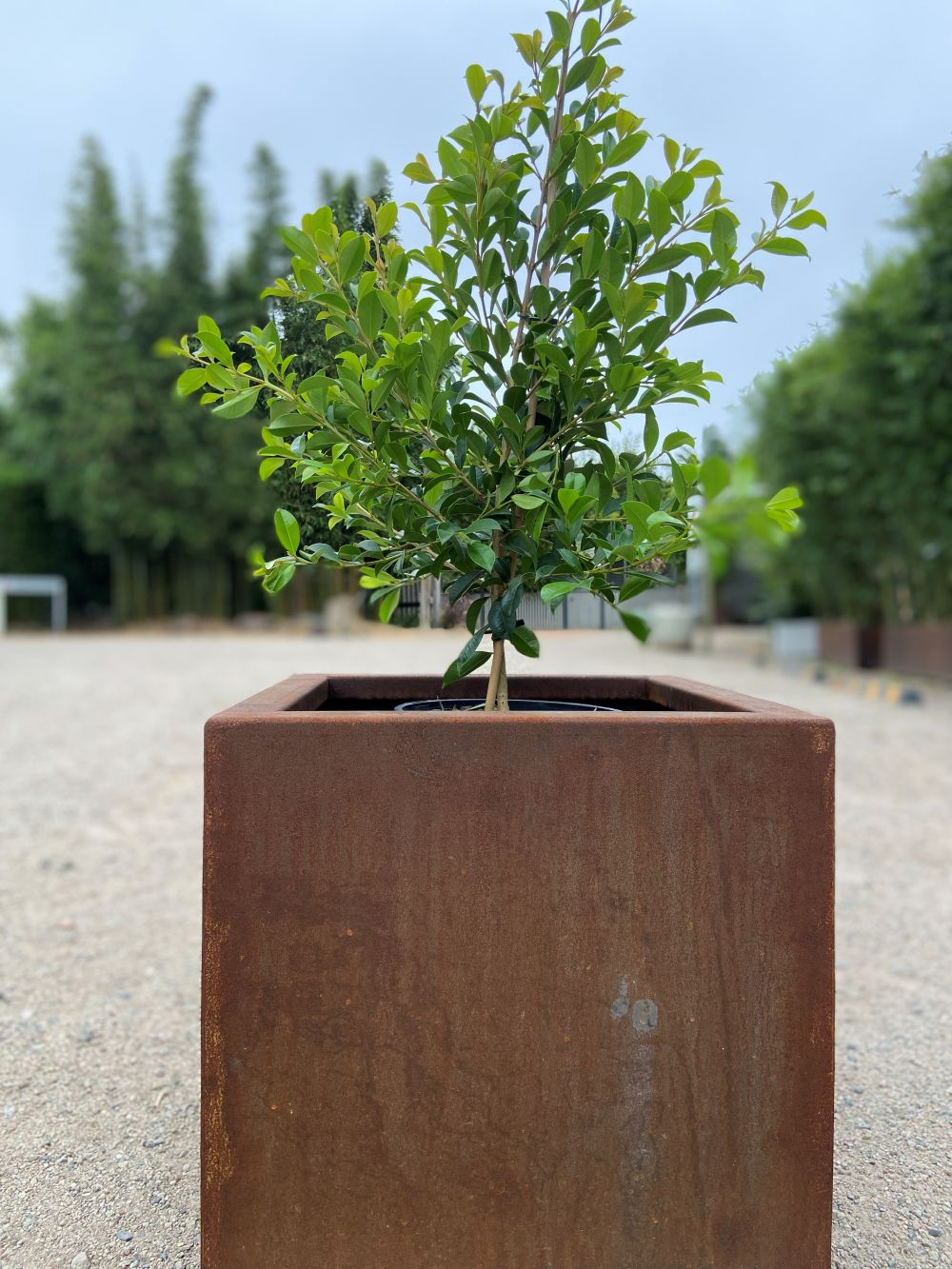
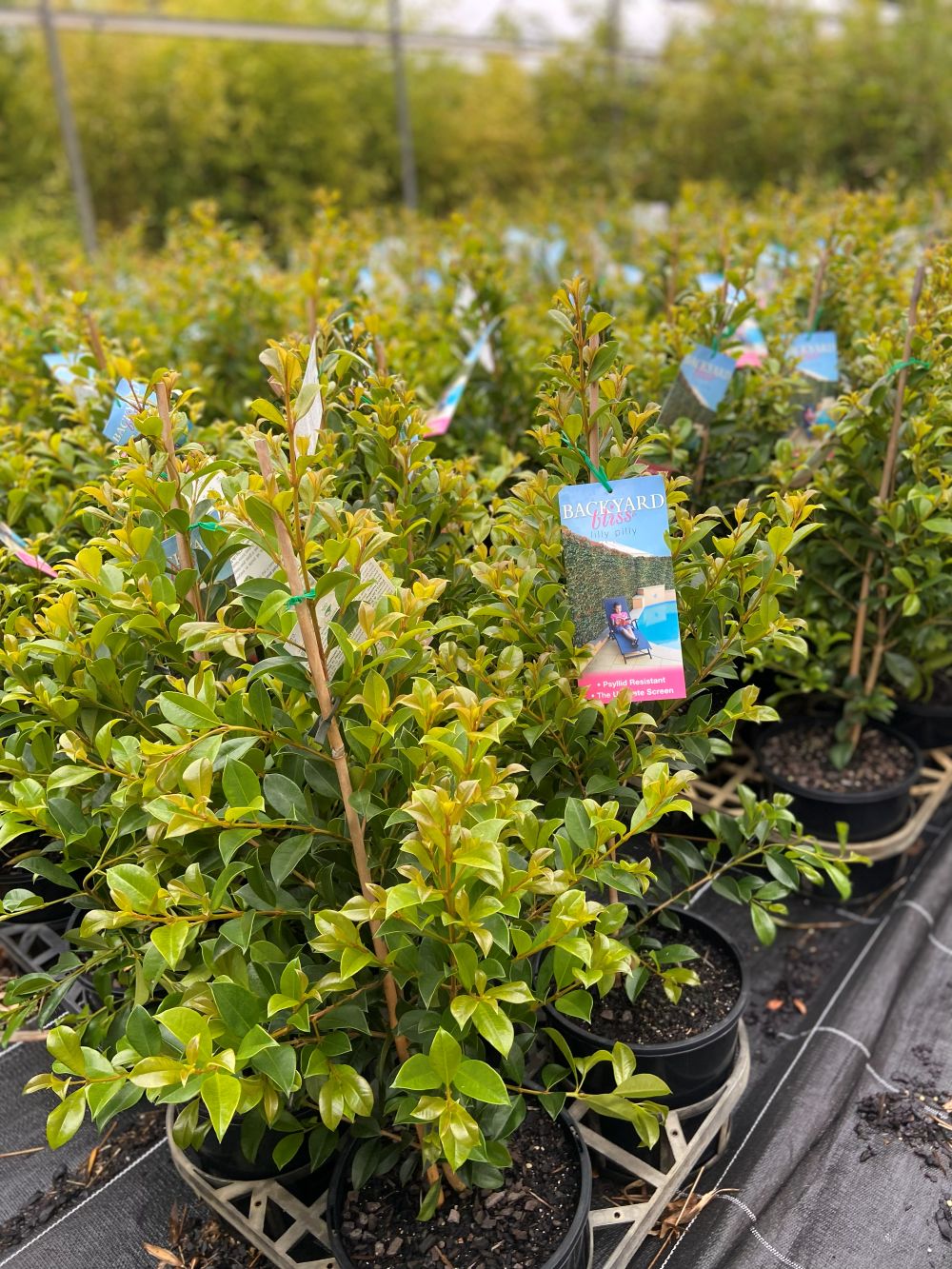
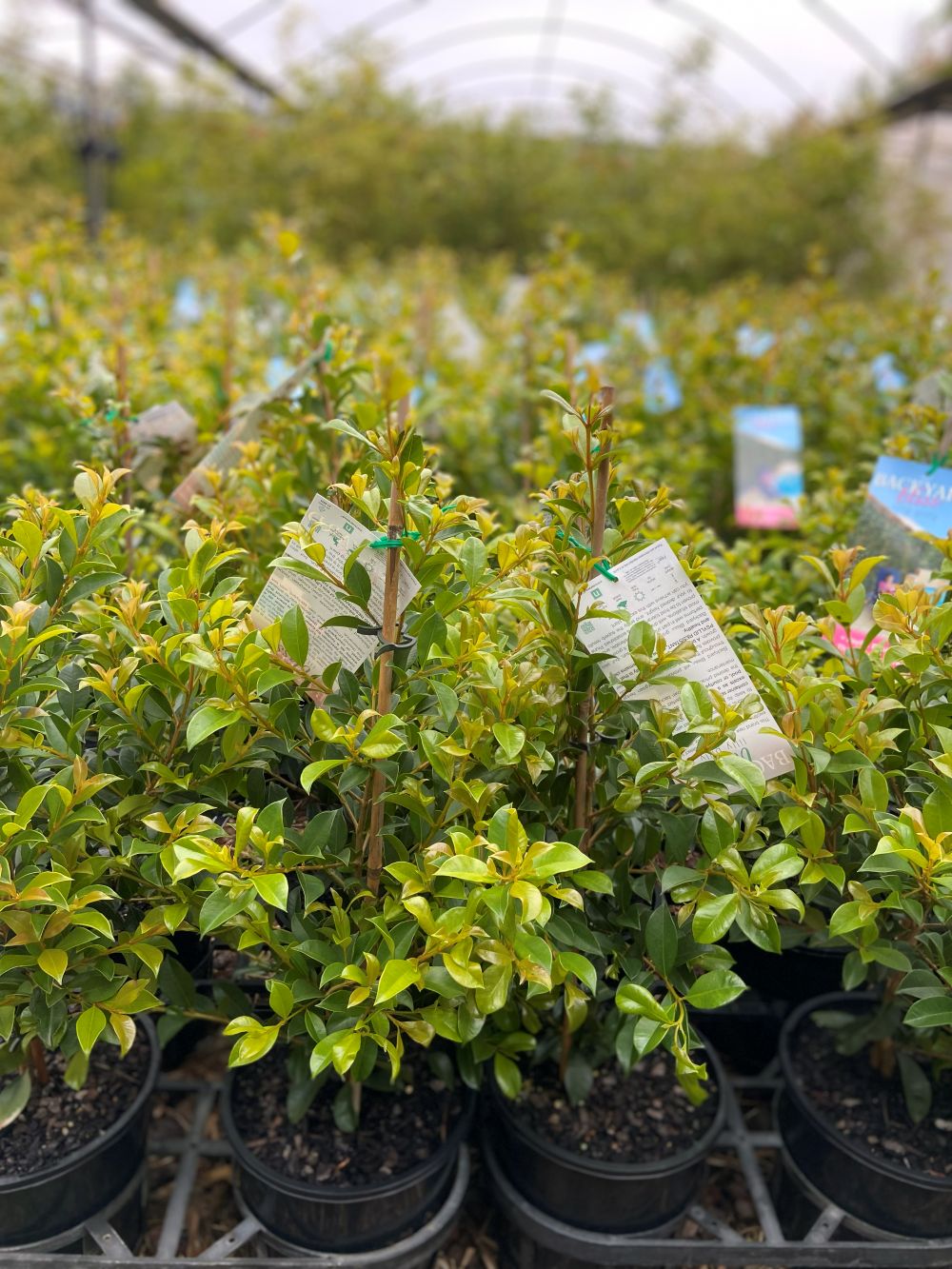
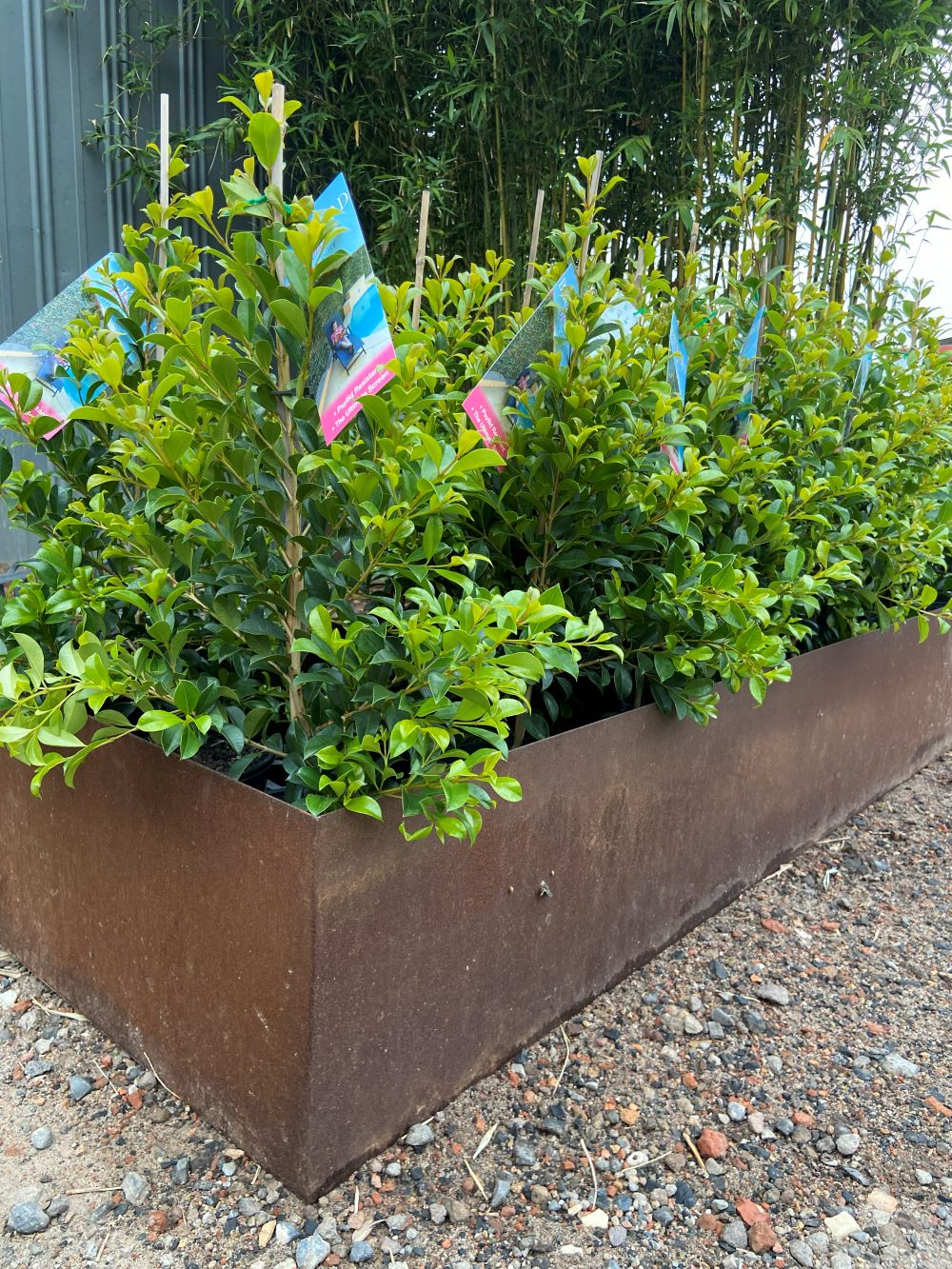
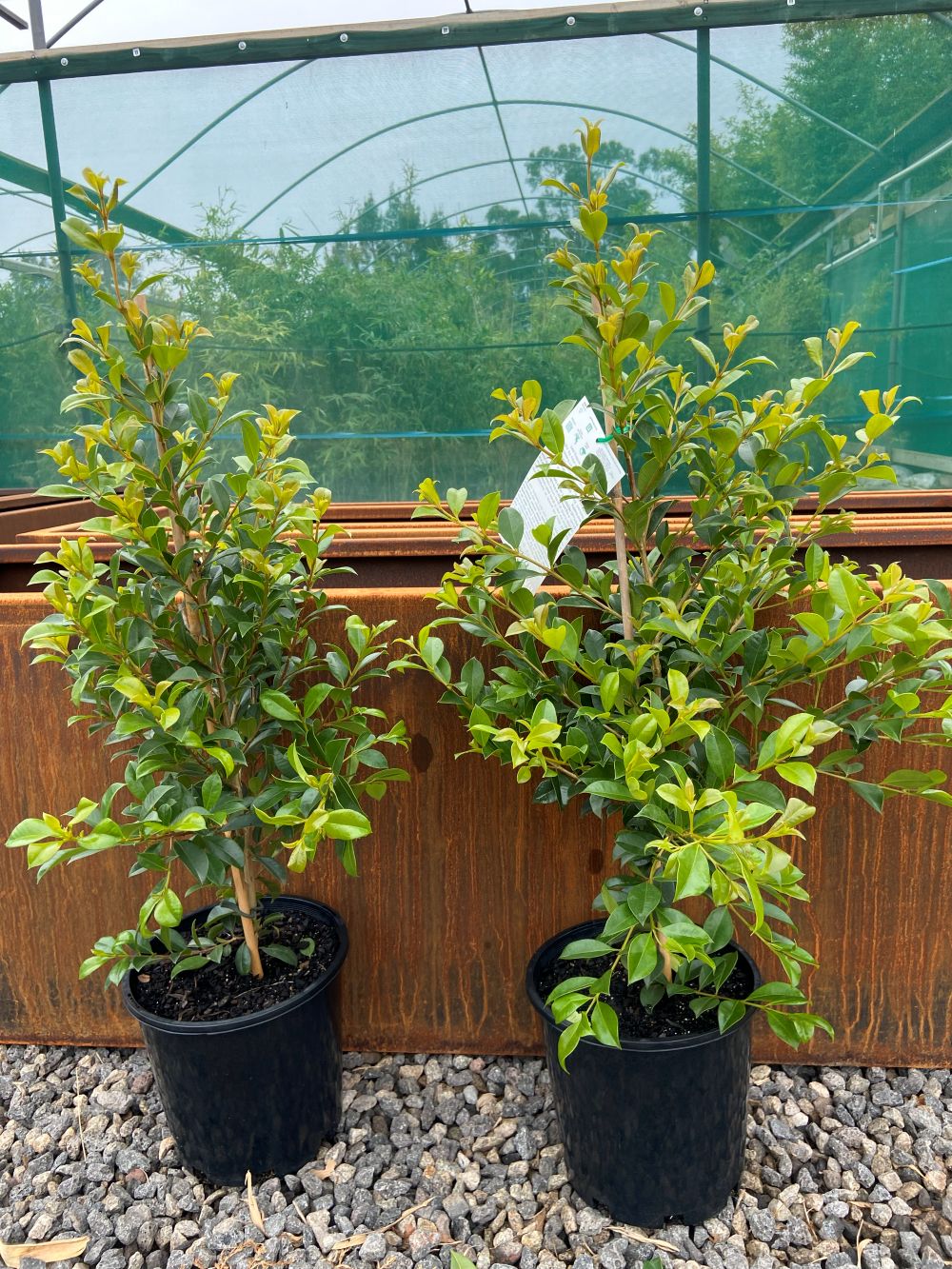
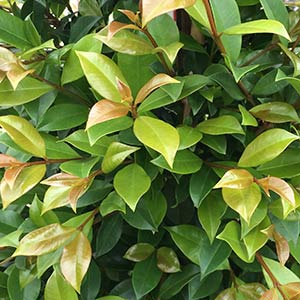
- Appearance: It features lush, glossy green mature foliage with striking flushes of coppery bronze to reddish new growth, providing year-round colour and visual interest. In summer, it produces small, fluffy white flowers that attract native birds and bees, followed by fleshy pink berries in autumn.
- Size: ‘Backyard Bliss’ is a compact variety, typically growing to a manageable height of 3–4 metres and a width of 1–2 metres, making it ideal for standard suburban backyards.
- Growth Rate: It has a fast growth rate, generally around 70–90 cm per year, allowing it to quickly establish a privacy screen.
- Growing Conditions:
- Sunlight: Thrives in a position with full sun to part shade.
- Soil: Adaptable to a range of well-drained soils, including clay and sandy types. Adding organic matter to the soil can improve performance.
- Watering: Requires regular watering during the initial establishment period. Once established, it is moderately drought-tolerant but benefits from occasional deep watering during extended dry periods.
- Climate Tolerance: It is both drought and light frost tolerant once established.
Maintenance and Uses
- Low Maintenance: A key benefit is its low maintenance requirement, needing minimal pruning to maintain a neat shape and dense habit.
- Pruning: For hedging, it is best to tip prune regularly from a young age to encourage bushy growth. Pruning is best done in late winter or early spring before the main growing season.
- Pest Resistance: It is bred to be resistant to psyllids, a common pest that causes “pimple-like” distortions on other lilly pilly varieties. However, it can be susceptible to the Lilly Pilly Green Beetle.
- Versatile Uses:
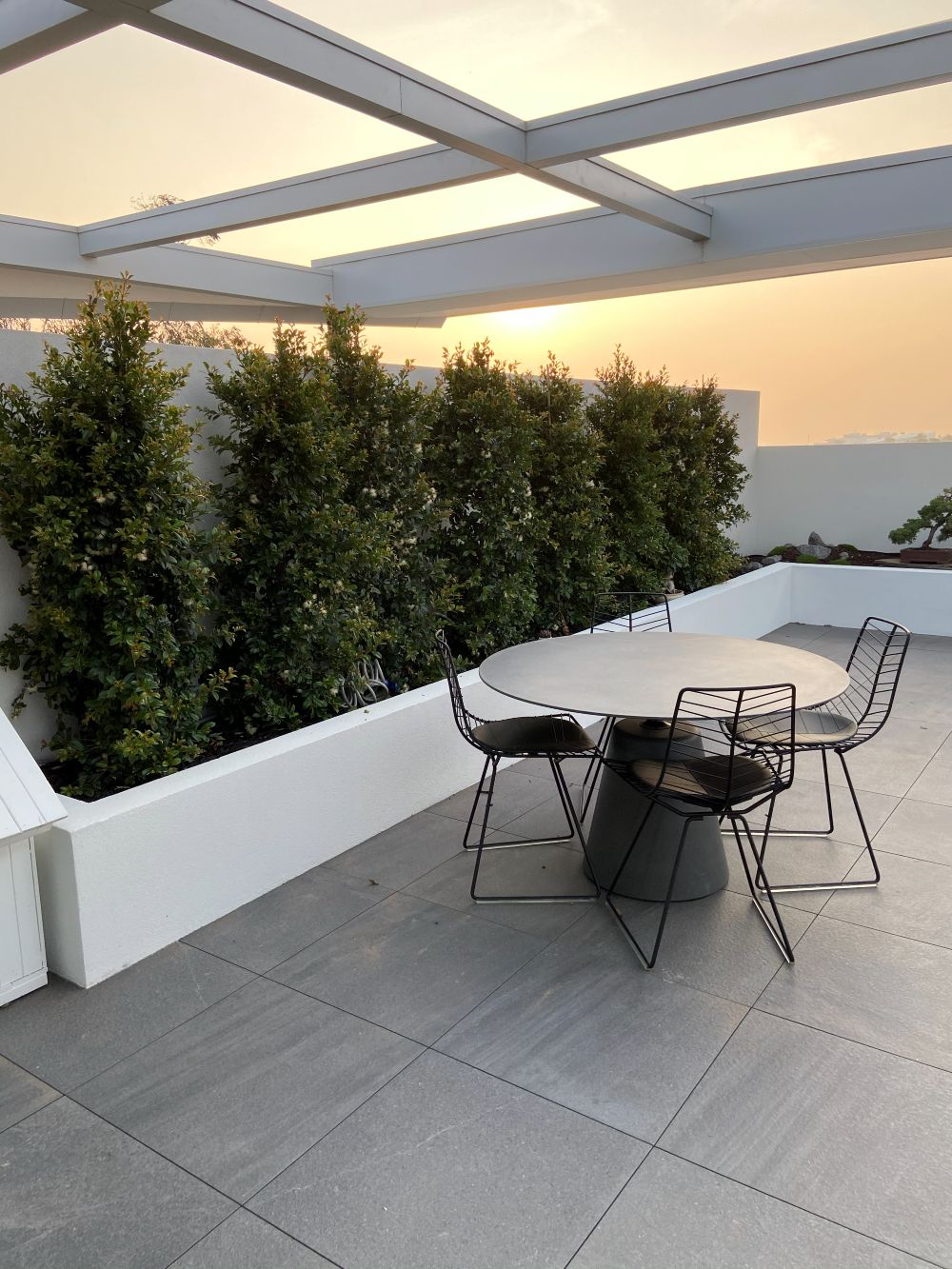
- Privacy Screening and Hedging: Its naturally dense foliage makes it an excellent choice for creating a formal hedge or a thick, green privacy screen around pools, courtyards, and boundaries.
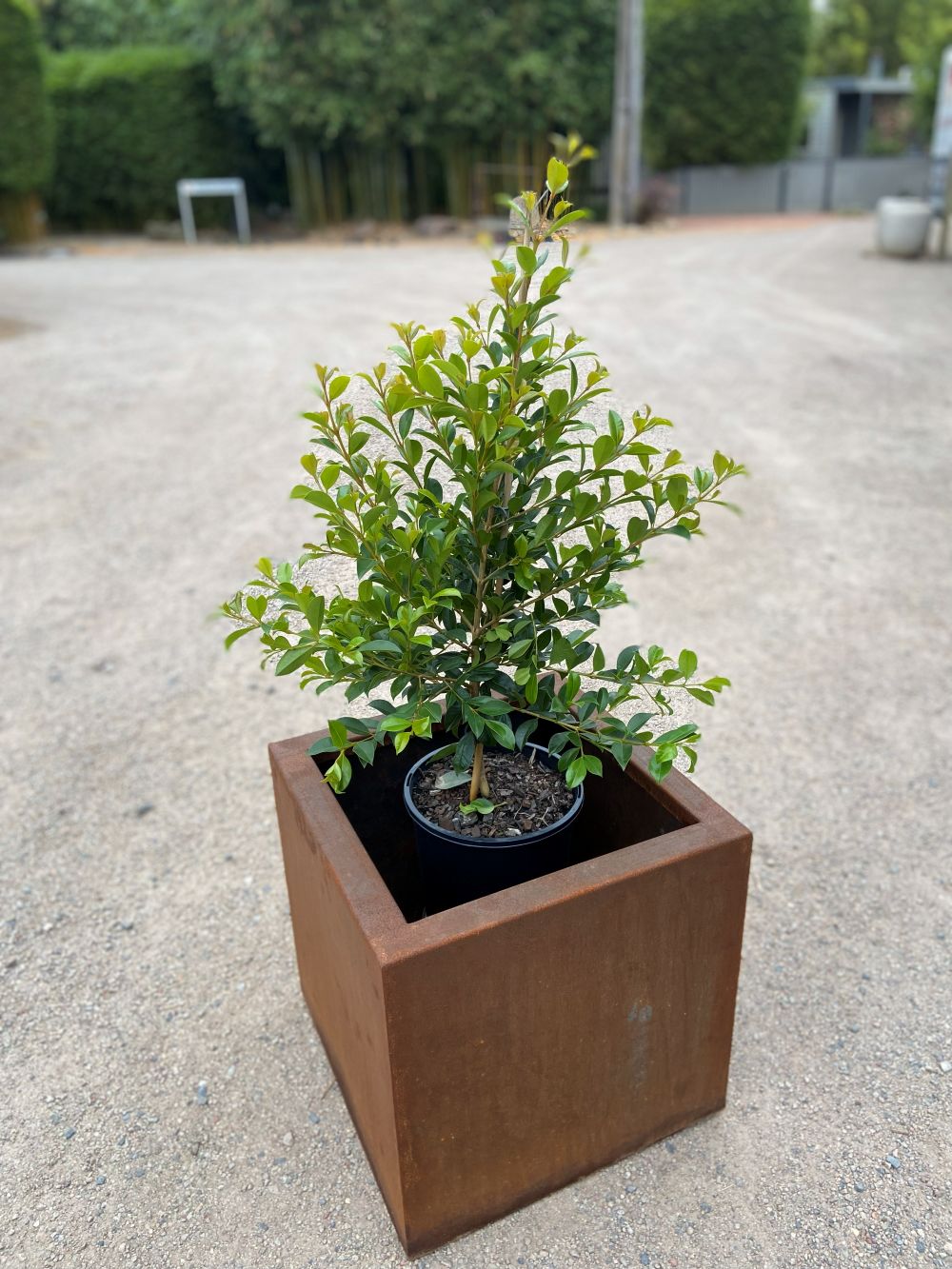
- Topiary/Pots: It responds well to shaping and can be grown as a container specimen for topiary.
- Native Gardens: As an Australian native, it attracts beneficial insects and birds, boosting garden biodiversity.


Reviews
There are no reviews yet.