
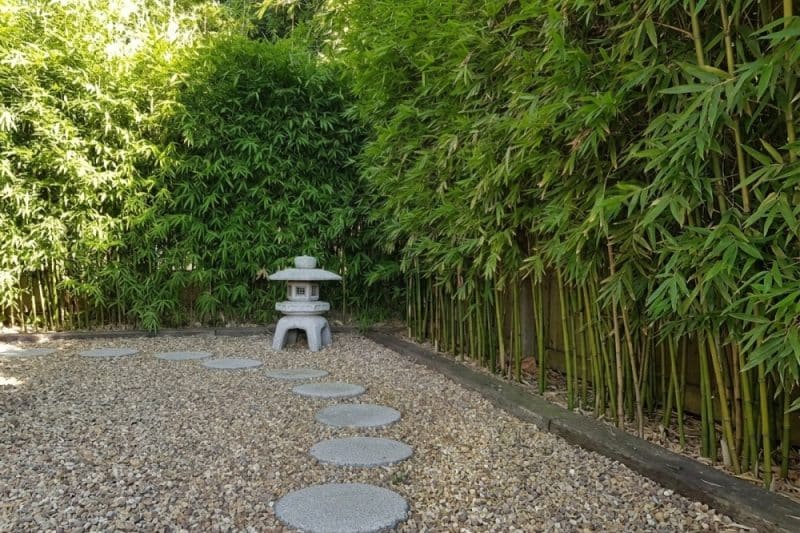
A screening hedge planted along a Boronia fence line back in 2019 is still exactly where it was put. No shoots turning up in next door’s vegetable bed, no calls from the body corporate, just a dense green wall doing its job six years on.
Ask any bamboo plants Melbourne nursery which variety pulls that off and the answer is almost always the same: clumping bamboo. It sits on the same trolley shelf as running bamboo, priced within a few dollars, looking nearly identical as a young plant. The difference only shows up later, and it’s entirely in the roots.
New Culms Come Up Where You Put Them
Clumping bamboo grows the way most people assume all bamboo grows. New culms push up tight against the base of the existing plant, not metres away under a fence somewhere. A mature clump will spread a metre or two across over several years, but it spreads in place, thickening rather than travelling. No barrier, no digging out, no five-year surprise in the neighbour’s garden bed.
Worth saying: that’s most of the appeal right there.
Running bamboo isn’t automatically a problem either, provided a proper rhizome barrier goes in before planting rather than after, and someone actually checks on it. Left alone, running rhizomes can push two or three metres a year once established. Contained properly from day one, they behave. The clumping habit just removes that step from the equation entirely, which is exactly why it’s become the safer default for anyone planting near a boundary.
Where Gracilis Fits In
Bambusa textilis Gracilis, the variety most often recommended for privacy screening around Melbourne, is a clumping type through and through. It grows tall and dense enough to block a sightline within a season or two of solid growth, and it stays roughly where it’s planted. That combination, fast, tall, well-behaved, is why it’s close to the default choice for anyone planting along a fence line, ahead of the older running varieties still growing across Melbourne’s older suburbs from decades back.
What The Label Actually Tells You
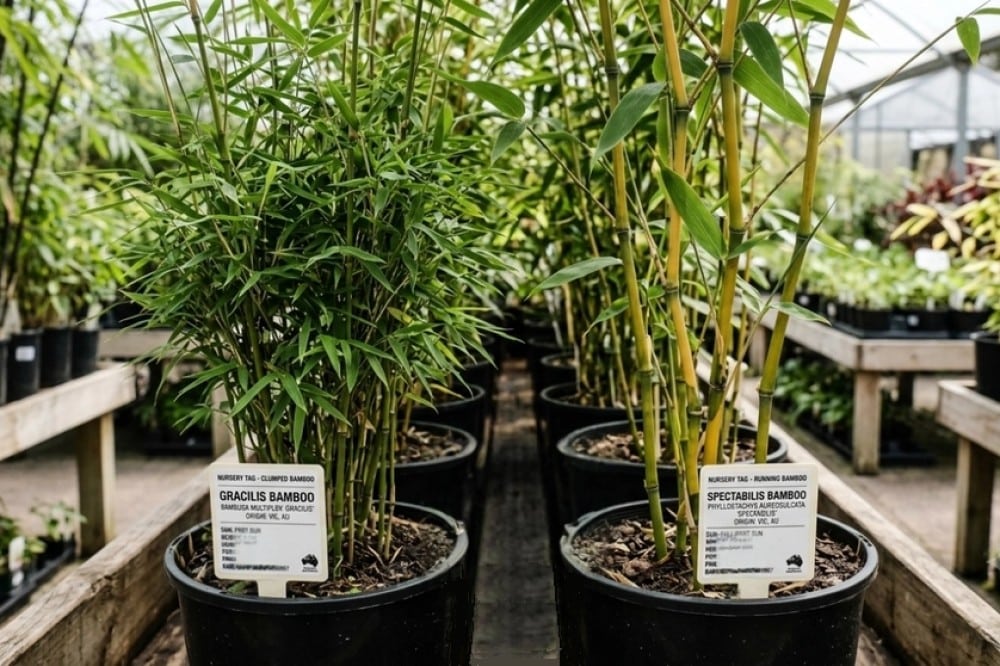
Most nursery tags skip the words “clumping” and “running” altogether and go straight to the botanical name instead, which is honestly the quicker way to tell the two apart before anything goes in the trolley.
- Bambusa, the genus Gracilis belongs to, clumps. Stays put, thickens in place.
- Phyllostachys is the genus behind most of the running varieties planted around Melbourne decades ago, still doing fine in gardens where a proper barrier went in early.
- A tag that just says “bamboo” with no genus listed? Worth asking about before it goes anywhere near the trolley.
- Running bamboo checked once a year and kept behind a deep barrier causes about as much trouble as any other spreading plant in the garden.
Not every clumping variety suits every spot, and picking the right one still comes down to the space, the light and what the planting needs to achieve.
For someone standing in a nursery in Heatherton working out which bag goes in the trolley, the shorthand holds up well: clumping stays, running spreads with the right setup, and either can do the job when it’s matched to the right spot. Ask which one’s on offer before asking anything else, including the price.