
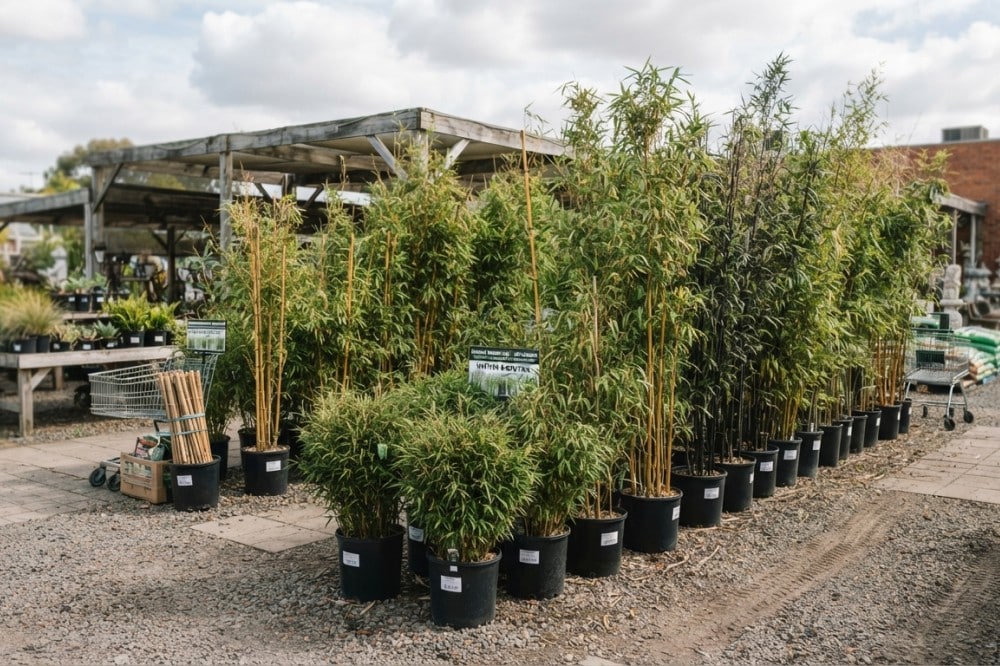
Most bamboo regret shows up about eighteen months after planting, when the screen everyon promised as fast growing is either still see though or has started creeping under next door’s fence. When buying bamboo plants in Melbourne, most people ask about height and never think to ask about the roots. That’s the question that actually matters. Clumping or running decides more about the next five years than anything printed on the plant tag.
What the Right Bamboo Actually Depends On
It comes down to three things: what the bamboo actually needs to do, how much room it’s allowed to take, and what the soil and sun are really like where it’s going. A privacy screen along a tight side boundary has different requirements to a feature clump in an open north facing corner, and the variety that suits one can be the wrong call entirely for the other. Growth habit matters just as much as looks here. Clumping varieties spread from a tight base and stay roughly where they’re planted. Running varieties send rhizomes out sideways under fences, driveways, whatever’s in the way, and they need a barrier or a lot of open ground to behave. Most suburban Melbourne blocks are better suited to clumping.
Soil plays a part too, and it’s rarely mentioned. A lot of Melbourne’s east has heavy clay, which holds water longer than bamboo generally likes while it’s establishing. Getting drainage right in the first season matters more than which variety gets chosen.
The Bamboo Plants Melbourne Gardens Keep Coming Back To
Bamboo gracilis is the one Melbourne gardens keep coming back to, and it’s not close. Bamboo Plus sells it across seven pot sizes, from $44 stock up to $480 for something close to an instant screen, and it tops out around six to eight metres once established. A newly planted screen typically fills in within eighteen to twenty four months, faster in good sun than in a shaded, exposed corner. It’s low maintenance and drought tolerant once past the first year, and it handles a hard trim without sulking, which matters if the screen needs to hold a specific height rather than run wild.
Gracilis isn’t the only answer, though. Bamboo Plus carries dozens of varieties and thousands of plants across the range, from dwarf clumping types suited to a courtyard pot through to taller screening bamboo for a full boundary job. A dwarf variety in a two metre gap between houses does a completely different job to a tall screening variety along an open rear fence, and treating them as interchangeable is where a lot of buying decisions go wrong.
Where Buying Bamboo Plants Goes Wrong
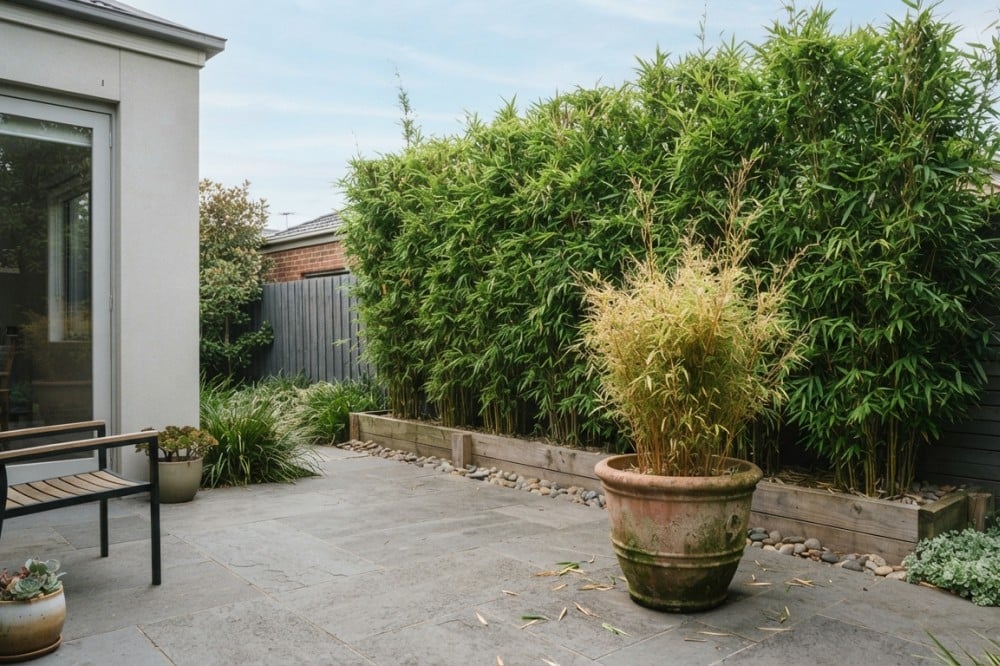
Tubestock is where most of the buyer’s remorse actually starts. It’s cheaper per plant, and for a large planting run that adds up fast. But a screen grown from tubestock can sit there for two or three seasons doing very little before it takes off, which is a long wait for anyone hoping to block out a new second storey next door by next summer. Advanced stock costs more per plant and gets there sooner. Neither choice is wrong. Buying tubestock and expecting advanced-stock results in year one is the actual mistake.
Mature height catches people out just as often. A bamboo bought at knee height in a two litre pot doesn’t stay that size, and six to eight metres is a serious commitment next to power lines, a garage roofline, or a boundary fence shared with a neighbour who hasn’t been consulted. Checking the mature height against the actual space, not the plant currently sitting in the trolley, is the one step that gets skipped more than any other.
None of this is really about finding some universal best bamboo. It’s about matching a variety to the space it’s actually going into, which is a different exercise for every garden. Talk to the Bamboo Plus team about what’s growing well this season before ordering online, particularly if the planting run is bigger than a handful of pots.